Iran and its Lebanese Hezbollah militia proxy on Thursday fired rockets again at Israel, where people are currently celebrating Passover.
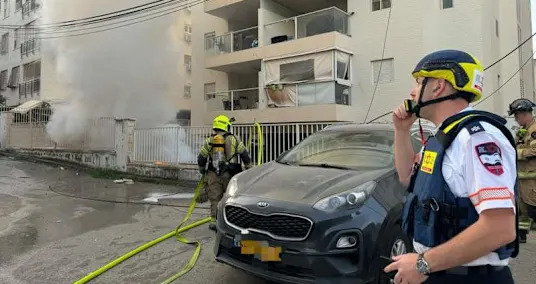
In the morning, warning sirens sounded repeatedly in northern Israel. Two men were slightly injured by a Hezbollah rocket, the Magen David Adom emergency service said.
An Iranian rocket also aimed at the north was fitted with cluster munitions, Israeli media reported. The use of cluster munitions is widely banned internationally because they can scatter explosive devices uncontrollably over large areas and are particularly dangerous for civilians.
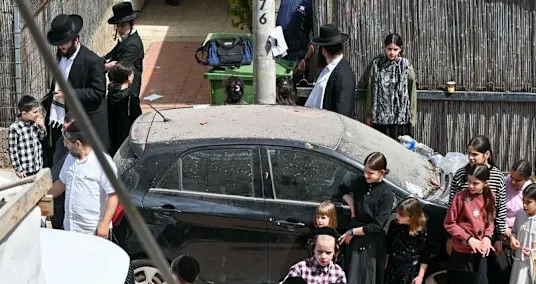
There was also repeated fire at Israel overnight. A rocket alert was triggered in the coastal metropolis of Tel Aviv, among other places. Magen David Adom reported several people with minor injuries from broken glass in a suburb of Tel Aviv, including two babies.
The week-long Passover festival began on Wednesday evening for Jews around the world. It commemorates the exodus of the Israelites from Egypt and their liberation from slavery.
latest_posts
- 1
 5 Christmas movies to stream for less with this Paramount+ Black Friday deal
- 2Genesis Marks 10th Anniversary With Magma GT Concept Aimed at High-Performance Flagships
- 3Curl Up With Some Hot Chocolate And Watch Mighty Car Mods Explore Japan In A Honda City Turbo II
- 4A throat bone settles it - Nanotyrannus was not a juvenile T. rex
- 5Tech Patterns 2023: 12 Advancements to Keep an eye Out For


- A 'rampaging lion' nebula roars to life in a stunning deep-space photo
- The Best Internet Mastering Stages for Expertise Improvement
- Zelensky sees new Russian attack threat from Belarus
- 5 Different ways Macintosh is Prepared to Overwhelm Gaming, Even Against Windows
- What will happen if Artemis 2 astronauts get hit by a solar storm during NASA's ambitious moon mission?
- Shrapnel hits across central Israel, injuring several, causing property damage
- Have gravitational waves provided the first hint of primordial black holes born during the Big Bang?
- Report in relation to renaming Herzog Park set to be withdrawn
- Thousands of genomes reveal the wild wolf genes in most dogs’ DNA